
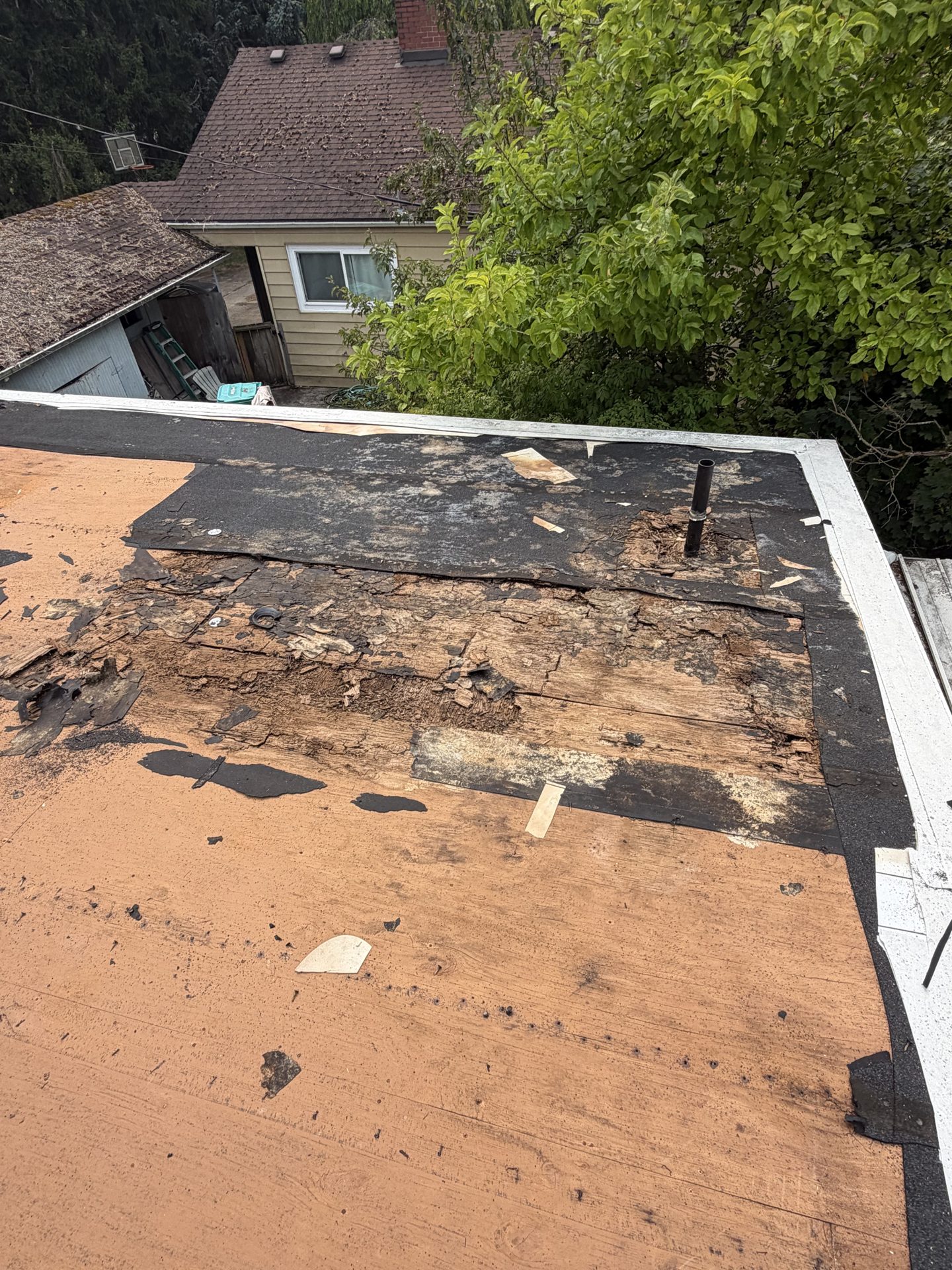
Wood rot may affect siding, sheathing, or framing. An initial written scope can be refined when concealed damage is exposed, with added work discussed before proceeding.
Why Rot Hides Behind Siding
Cladding is the outer layer that sheds rain, and it works with flashing, drainage, and water-resistive layers behind it to keep water out of the wall. When water gets past those layers, the wood behind it, the sheathing, trim, or framing, can stay damp long enough for rot to take hold. In Portland, where wet weather is common for much of the year, this is a familiar problem in older homes.
The rot is often not visible from outside. A board may look fine on the surface while the wood behind it is soft. That is why the full extent is not known until the siding is opened and the underlying wood is inspected.
Sheathing and Framing Can Both Matter
Sheathing is the layer of wood panels attached to the framing, sitting between the studs and the siding. It is what you see when siding is removed. Framing is the structural skeleton, the studs, plates, and headers that carry the load of the wall and the house above it.
Both sheathing and framing can matter, and the right repair depends on which is affected and how much. Rot in the sheathing may involve cutting out the rotted section and replacing it, though sheathing can also contribute to bracing the wall, so the repair is assessed rather than assumed simple. Rot in the framing is more involved because those members are structural. A qualified assessment determines the extent and the appropriate repair for your situation.
Where Water Gets In
Water usually enters at openings and transitions: around windows and doors, at roof intersections, behind flashing, at trim corners, and where siding meets a deck or porch. Any joint that should shed water but has lost its seal or was never properly flashed is a candidate.
Finding the entry point matters. If the source is not addressed, replacing the rotted wood does not stop the same problem from coming back. The source may be a flashing gap, a failed caulk joint, or a roof issue above. Some sources are within a siding repair scope and some are not.
Defining the Scope After Opening the Wall
Because the full extent is hidden, a preliminary estimate is based on what is visible. The actual work depends on what the sheathing and framing look like once the siding is off. A written initial scope covers the visible damage, with documented revisions for concealed conditions found during the work.
If opening the wall reveals more rot than expected, that change is discussed before the work expands. A written scope that starts with the visible damage and is updated as hidden conditions are exposed keeps the project clear.
What You Can Safely Observe
You do not need to open walls yourself to spot warning signs. Visual observations from the ground or interior can tell you whether to call for an assessment.
- •Paint or stain that is bubbling, peeling, or flaking near joints
- •Discolored or darkened patches on siding, especially near windows and doors
- •Trim that is pulling away or gaps opening at corners
- •A musty smell or visible water staining inside near an exterior wall
- •Visible warping, cracking, or separation in siding or trim
Questions to Ask Before the Work Starts
Once rot is confirmed, a few questions help you understand the scope before committing.
- •Is the rot in the sheathing, the framing, or both?
- •Where is the water getting in, and is that source part of this scope?
- •What will you see when the siding is opened, and how will changes be handled?
- •Is there any structural framing that needs a closer look or a separate trade?
- •What is included in the written estimate and what is not?
Common Questions
Is all rot behind siding structural?
Not necessarily, but both sheathing and framing can matter. Sheathing can contribute to bracing the wall, and framing carries the load, so a qualified assessment determines the extent and the appropriate repair. The distinction matters for scope and cost, and it is determined after the area is opened.
Can you guarantee the moisture source is fixed?
We identify the likely source where it is visible and address it where possible within the scope. Some sources, like a roof issue above, may need a separate trade. We explain what we can address and what to handle separately rather than guaranteeing every source is resolved.
What if suspected mold is found?
If mold is suspected, the assessment may need a qualified mold remediation specialist. We handle the wood repair, sheathing, framing, and siding restoration, but mold assessment and remediation are a separate specialty that should be evaluated by the appropriate professional.
How much rot is too much to repair?
There is no fixed line. The decision depends on how much sheathing and framing are affected, whether the source is addressable, and the condition of the surrounding wood. We assess the extent on site and explain repair versus replacement options for your specific situation.
Keep Reading
Siding Repair or Replacement: How Do You Decide?
Siding damage runs from a few loose boards to widespread failure. The right call depends on extent, cause, and how the repair matches the rest of the house.
Read guideShould You Repair Siding Before Painting Your House?
Paint does not fix soft siding. If the substrate is unsound, the coating fails. Here is why repair comes first and what the prep sequence involves.
Read guideConcerned About Wood Rot Around Your Home?
We assess the work on site and explain the practical options. Request a free, no-obligation consultation and we reply within one business day.